Sunday, March 19, 2017

Identification of Syngonanthus flavidulus, not Lachnocaulon beyrichianum EDIT05172022


Identification of Lachnocaulon beyrichianum - Summer 2016
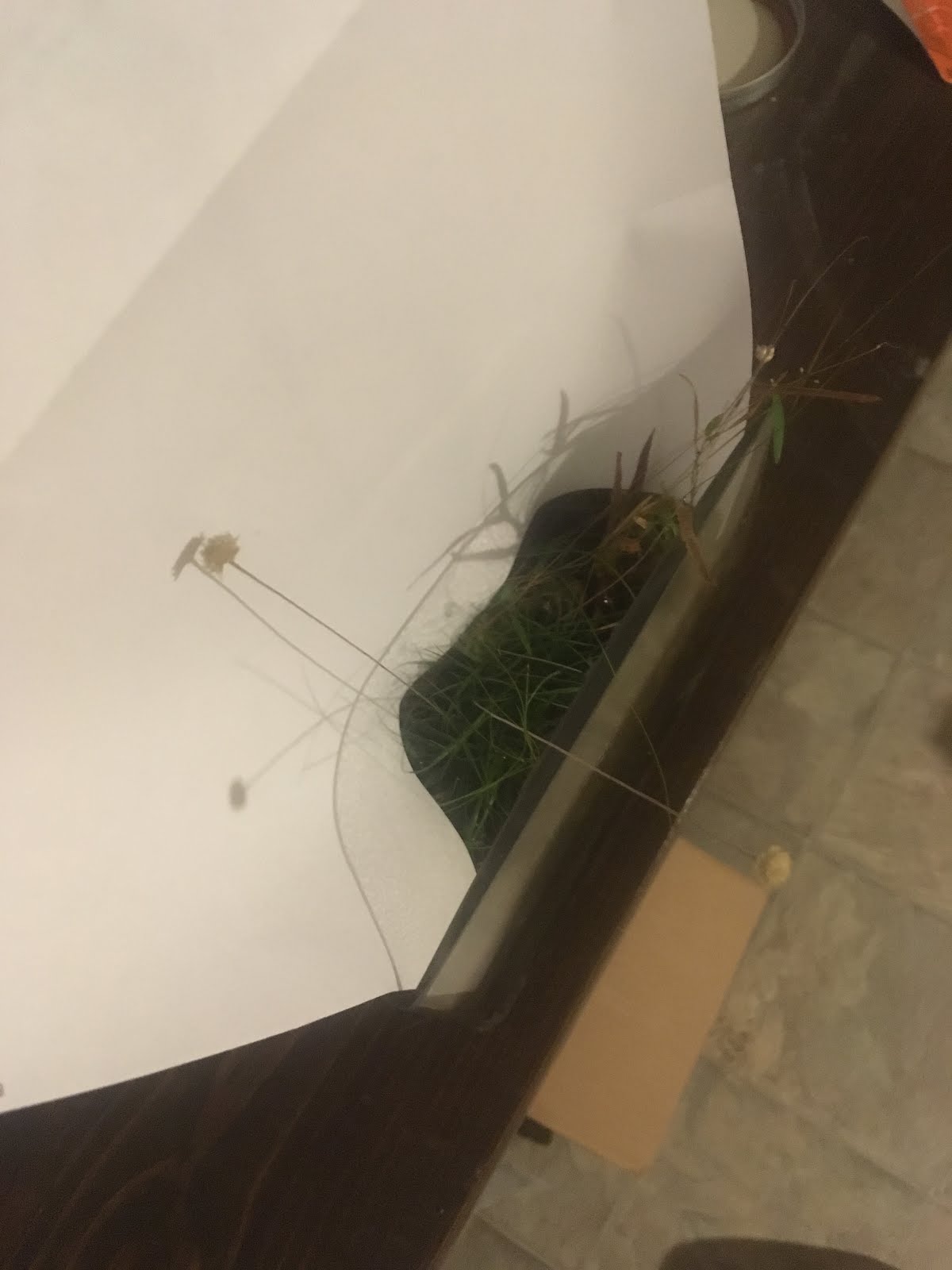
Lachnocaulon beyrichianum Form
This plant looked like a tuft of grass and weed. It was green and I didn’t care that it was growing and left it. Later it grew a flower head that could not be mistaken for anything other than a pipewort, Eriocaulaceae. I thought all pipeworts were all in one genus, but to my surprise they are not. Eriocaulaceae comprises 3 different genus in the United States: Eriocaulon, Lachnocaulon, and Syngonanthus.

Lachnocaulon beyrichianum Form
The genus Eriocaulon is described as having a scape (a separate stem just for the flower and without leaves) that is glabrous (smooth, without hairs) by Radford 1968 and Chafin 2010. My specimen has hairs all over the scape. Concluding: it is not Eriocaulon.

The genus Syngonanthus is described as having a sheath (like the sheath of a sword, for a leaf) on the scape (a separate stem just for the flower and without leaves) that is longer than the regular leaves (leaves not assisting the flower stalk). My specimen had sheaths that were just as long as the regular leaves. Concluding: it is not Syngonanthus.

Lachnocaulon beyrichianum scape and flower
Lachnocaulon have branches fibrous roots whereas Syngonanthus has thick, spongy unbranched roots. I didn’t uproot the plant, yet, but this could be helpful for others. The only species in this area is Syngonanthus flavidulus (Radford 1968). Flavidus means yellowish (Stearn 1997). This species is noted to have yellow flowers at times, my specimen was only white or greyish. Root have yet to be determined. Flower explains the specimen is not Syngonanthus.

Only Lachnocaulon remains. Radford (1968) mentions 3 species for the area around the Carolinas: L. beyrichianum, L. minus, and L. anceps. Godfrey (1979) mentions 5 in the Southeastern United States with the inclusion of two additional: L. engleri and L. digynum.

Godfrey (1979) describes L. digynum as having glabrous or almost glabrous (smooth, without hairs) 5.0-10.0 cm scape (flower stalk without leaves). My specimen has a hairy, 24 cm scape. Another had a 19 cm scape. The flower head of L. digynum described as 2.0-3.5 mm broad whereas my specimen had ~7 mm broad flower head. BONAP, a database of plant locations, reports this species as not found in Georgia. I am confident the plant is not L. digynum.

Scape and flowers of Lachnocaulon beyrichianum
L. engleri is described as having leaves 2.0-3.0 cm long, with a mature scape (flower stalk without leaves) 6.0-15.0 cm long, with a mature flower head of 3.0-8.0 mm long, “3.0-4.0 mm wide, dark brown with mention appearing smooth in contrast to the heads of other Lachnocaulon.” My specimen has leaves longer than 3 cm with a flower head that is more globose (sphere) and hairy than the glabrous (smooth, not hairy) football like shape description of L. engleri (Godfrey 1979). Also the flower head was 7 mm wide. BONAP, a database of plant locations, reports this species as not found in Georgia. It is not L. engleri.

Twisted scapes of Lachnocaulon beyrichianum examined through a loupe.
L. minus is described as having 2.0-3.0 cm long leaves, 6.0-15.0 cm long scape, with cylindrical, 4.0-6.0 long, 3.0-4.0 mm broad flower head. My specimen had longer leaves, a 24 & 19 cm scape (flower stalk without leaves), and had a flower head at least 7 mm wide, appearing wider than long (Godfrey 1979). It is not L. minus.

Twisted scape of Lachnocaulon beyrichianum examined through a compound microscope.

L. beyrichianum has leaves up to 4 cm long, scape (flower stalk without leaves) up to 23 cm long. My specimen had leaves at least 4 cm long so this doesn’t help much, but with a scape of 24 & 19 cm long with L. anceps having a scape ranged of 15-40 cm long (Godfrey 1979) up to 45 cm long (Radford 1968). Godfrey (1979) mentions the seeds are “highly lustrous” in L. beyrichianum and pale to dark brown in L. anceps. I did collect the seeds from the flower head from my specimen, which were very small. Under a 10x magnification the seeds were smooth ellipsoid light brown gel looking, if I can phrase it that way. They were not shiny as lustrous is defined. Radford (1968) mentions the seeds of L. beyrichianum as smooth and those of L. anceps as striate (having lines), so this confused my identification. I would need equipment with more magnification to see any lines on the seeds. Godfrey (1979) describes the flower head as up to 5.0 mm broad in L. beyrichianum and up to 7.0 mm broad in L. anceps. My specimen was ~7 mm broad matching L. anceps. Chafin’s (2010) account of L. beyrichianum provides information to distinguish it from L. anceps, again with the flower head difference. Looking at drawings provided by Godfrey (1979), the seeds appear to be a similar form of L. anceps. I conclude identification of my specimen as Lachnocaulon anceps, or so I thought…

Zona et al. (Zona and other co-authors) provides good scanning electron microscope (SEM) images for, as it is titled, “Seeds of Eriocaulaceae for the United States and Canada” (2012). This can help if people can look at seeds under a microscope.

I examined these features August to September 2016.

January 2017

Well I got some microscope thanks to my buddy Top Cat. Now I can look at the seeds up close.

Coin holder seed card of Lachnocaulon beyrichianum seeds
Using the dissecting microscope:

Lachnocaulon beyrichianum seeds at 20x magnification using a dissecting microscope.
Lachnocaulon beyrichianum seeds at 40x magnification using a dissecting microscope.
Using the compound microscope:
Lachnocaulon beyrichianum seeds at 40x magnification using a compound microscope.
I then compared the microscope images to those of Zona 2012 and their description of seeds for the species of this family of plants. Some of the seeds have “appendages” that can be seed on the seed coat. My seed looks very much like that of L. beyrichianum or L. engleri. My suspected L. anceps is reported to have “T-shaped” appendages as well many of the other species. Yet my seeds do not have these appendages. L. beyrichianum is noted “ornamentation absent” or rather said no appendages from the seed coat. L. digynum, appendages. L. engleri is also noted to be without appendages on the seed coat. L. minus has appendages. Syngonanthus flavidulus is also noted to have no appendages. In their discussion, they mention Lachnocaulon have two different kinds of seeds. Those with appendages and those without. I haven’t mentioned this but the seeds look like they have lines on them, as should be seen by the images. Zona 2012 displayed these lines are “quadrangular” or make up little rectangles along the seed surface. L. beyrichianum and L. engleri have rectangles with a ratio greater than 1:6 length by width. L. digynum and L. minus have a ratio less than 1:6 length by width, rather they have wider rectangles.
Lachnocaulon beyrichianum seeds at 100x magnification using a compound microscope. Note the ridges or lines.
My observation had me choose L. anceps or L. beyrichianum. Zona 2012 has me chose L. beyrichianum or L. engleri. BONAP indicates only L. anceps, L. beyrichianum, and L. minus are found in Georgia. From all this I am convinced I have Lachnocaulon beyrichianum.


Lachnocaulon beyrichianum seeds at 400x magnification using a compound microscope. Note the ridges or lines are rectangles with a ratio greater than 1:6 length by width. This is a key characteristic for my identification. Yes hard to see in photo.
Chafin 2010 reports this is a species of special concern. This species gets a rarity ranking of G3/S1. The letters stand for location. G is for global and S is for state. The numbers represent population estimates in that 1 is very rare and at risk of extinction and 5 is common, widespread and abundant. Translated for this plant, Lachnocaulon beyrichianum is considered very rare in Georgia, but is seemingly ok globally (it is more commonly found in Florida than in Georgia). Chafin 2010 mentions the conversion of habitat to pine plantations and pastures are a problem for this species as well as ditching and draining of wetlands, and fire suppression. This site was in a ditch beside a pine plantation with fire suppressed. She explains 6 populations are known and only 1 on protected land. The Georgia Department of Natural Resources also indicates this species is rare for the state and of concern (http://georgiawildlife.com/SpeciesInfo/Plants).

Thank you for reading. Comment if you would like. Have a nice day!

Citation

Kartesz, J.T., The Biota of North America Program (BONAP). 2015. North American Plant Atlas. (http://bonap.net/napa). Chapel Hill, N.C. [maps generated from Kartesz, J.T. 2015. Floristic Synthesis of North America, Version 1.0. Biota of North America Program (BONAP). (in press)]. Specifically http://bonap.net/NAPA/TaxonMaps/Genus/County/Lachnocaulon.

Zona, Scott, Philip Davis, L.A.A.H. Gunathilake, Jeffery Prince, and James W. Horn. 2012. Seeds of Eriocaulaceae of the United States and Canada. Castanea 77(1):37-45.

Chafin, Linda G. 2010. Common Name: Southern Bog-Button. Assecced on 11 January 2017 from http://georgiawildlife.com/sites/default/files/uploads/wildlife/nongame/pdf/accounts/plants/lachnocaulon_beyrichianum.pdf.

Godfrey, Robert and Jean Wooten. 1979. Aquatic and Wetland Plants of Southeastern United States: Monocotyledons. University of Georgia Press. [I failed to record edition].

Radford, Albert E., Harry E. Ahles, and C. Ritchie Bell. 1968. Manual of the Vascular Flora of the Carolinas. University of North Carolina Press; 1st ed.

Sunday, March 12, 2017

Amount to Plant – 2017 Planting – Carnivorous Plant Portion


Amount to Plant – 2017 Planting – Carnivorous Plant Portion
2/13/2017

The carnivorous plant portion of the 2017 Planting will cover 11 species or variations of those species.

Table 1. Species used in the carnivorous plant portion of the 2017 Planting.

Species
1
Dionaea muscipula
2
Drosera brevifolia
3
Drosera capillaris
4
Drosera filiformis
5
Drosera filiformis tracyi
6
Rhexia alifanus
7
Rhexia species unknown
8
Sarracenia minor
9
Sarracenia oreophila
10
Sarracenia rubra alabamensis
11
Utricularia subulata

I have assigned two shelves for this portion with space to hold 144 cups. I looked into using equations to determine power for this part of the experiment. Power doesn’t really apply to this situation as I am not looking or testing for a difference of anything. Power equations also used known values. I do not know those values and they would have to be estimates. Although a well thought out power analysis could help somewhere, it is beyond me, and I feel it unnecessary.

The amount of cups assigned to each species was based on equal portions. I’ve mentioned this in another write up: The result of 8 is a good suggestion. “In some disciplines, group sizes of eight are almost universal and some referees may go so far as to reject a paper which deviates from this norm,” (http://www.ebd.csic.es/documents/240051/0/Sample_size_and_power_analysis.pdf/bbe6cc3f-31a8-405f-9e2b-65b5edf3a881). If I were to test the difference of any one the planting, I would probably test between two species at a time, at least initially. At 8 cups per species, for 2 species, the resource equation is as follow: E = total sample – total treatments. I enter the values: E = 16 – 2 = 14. The resource equation suggestions an E value between 10 and 20. My result was 14, an acceptable value.

Initial combinations had me planting more of species I didn’t care about than Sarracenia, which is the purpose of this planting. I rearranged the species and numbers and developed a design. I then confirmed I had seeds for my designed. Unfortunately, I did not have the seeds I had hoped. This led to developing a new design. I mention this here so others make sure they know exactly how many seeds they have before they perform a similar project. I’ve said this next part before in other words in a write up: 1) Determine how many cups do I want to appropriate to a species; 2) Determine how many seeds are available; 3) then combine those findings to determine how many seeds per how many cups. Seems logical but easy to get off track, yet you will have to address the issue. Do keep those tips in mind.


Table 2. Species and cups per species for the 2017 Planting. Species abbreviated. *Denotes the competition portion of the experiment.

Species
Abbreviation
144 cups
Sarracenia minor
SMF
8
Sarracenia minor
SMM
8
Sarracenia minor
SMS
8
Sarracenia minor
SMH
8
Sarracenia oreophila
SO
8
Sarracenia oreophila
SO-2
8
S. ...alabamensis
SA
8
S. ...alabamensis
SA-2
8
Dionaea muscipula
VFT
8
Rhexia unknown
RX
8
Rhexia alifanus
RXA
8
Drosera capillaris
DC
8
Drosera filiformis
DF
8
Utricularia subulata
US
8
Drosera filiformis tracyi
DT
2
Drosera brevifolia
DB
3
S. minor competition
*SMV2xRXAxDF
8
S. oreophila competition
*SOxRXAxDF
8
S. ...alabamensis competition
*SAxRXAxDF
8
Control
nothing
3

With the amount of cups designated to species, I need to determine the amount of seeds per cups. I performed this determination previously for the Baptisia portion of the 2017 Planting, and I will use a similar method in this portion. I consulted the literature through a search of germination percent for the Sarracenia genus and made a table.

Table 3. Literature search results of Sarracenia germination.


Species
%
Citation
Type
S. purpurea
100%
Schwaegerle 1983
Cold 6 weeks
S. alata
80%
Ellison 2001
Cold 4 weeks
S. alata
80%
Ellison 2001
Cold 5 weeks
S. flava
80%
Ellison 2001
Cold 4 weeks
S. purpurea var purpurea
80%
Ellison 2001
Cold 4 weeks
S. purpurea var purpurea
80%
Ellison 2001
Cold 5 weeks
S. purpurea
80%
Gotsch 1998
Cold 6 weeks, light
S. leucophylla
78%
Conner 2012
Cold 6 weeks, 7 month seed
S. leucophylla
75%
Conner 2012
Cold 4 weeks, 7 month seed
S. leucophylla
72%
Conner 2012
Cold 8 weeks, 7 month seed
S. alata
70%
Ellison 2001
Cold 2 weeks
S. flava
70%
Ellison 2001
Cold 5 weeks
S. minor
70%
Ellison 2001
Cold 5 weeks
S. leucophylla
67%
Northcutt 2012
Chemical scarring, agar
S. leucophylla
66%
Northcutt 2012
Chemical scarring, agar
S. leucophylla
60%
Ellison 2001
Cold 4 weeks
S. minor
60%
Ellison 2001
Cold 4 weeks
S. flava
50%
Ellison 2001
Cold 2 weeks
S. psittacina
50%
Ellison 2001
Cold 2 weeks
S. psittacina
50%
Ellison 2001
Cold 5 weeks
S. purpurea var purpurea
50%
Ellison 2001
Cold 2 weeks
S. purpurea var venosa var burkii
50%
Ellison 2001
Cold 4 weeks
S. purpurea var venosa var burkii
50%
Ellison 2001
Cold 5 weeks
S. rubra
50%
Ellison 2001
Cold 4 weeks
S. leucophylla
50%
Northcutt 2012
Chemical scarring, agar
S. oreophila
50%
Northcutt 2012
Chemical scarring, agar
S. purpurea
50%
Gotsch 1998
Cold 4 weeks, light
S. leucophylla
50%
Conner 2012
Winter screen bag in the field
S. oreophila
46%
Northcutt 2012
Chemical scarring, agar
S. flava
44%
Sheridan 2000
Cold 6 weeks
S. flava
43%
Sheridan 2000
Cold 6 weeks
S. leucophylla
42%
Northcutt 2012
Chemical scarring, agar
S. jonesii
40%
Ellison 2001
Cold 4 weeks
S. jonesii
40%
Ellison 2001
Cold 5 weeks
S. leucophylla
40%
Ellison 2001
Cold 2 weeks
S. leucophylla
40%
Ellison 2001
Cold 5 weeks
S. minor
40%
Ellison 2001
Cold 2 weeks
S. psittacina
40%
Ellison 2001
Cold 4 weeks
S. oreophila
40%
Northcutt 2012
Chemical scarring, agar
S. oreophila
35%
Northcutt 2012
Chemical scarring, agar
S. jonesii
30%
Ellison 2001
Cold 2 weeks
S. rubra
30%
Ellison 2001
Cold 2 weeks
S. leucophylla
26%
Northcutt 2012
Chemical scarring, agar
S. rubra
25%
Ellison 2001
Cold 5 weeks
Various crosses
23%
Sheridan 1997
Cold
S. flava
22%
Sheridan 2000
Cold 6 weeks
S. leucophylla
22%
Northcutt 2012
Chemical scarring, agar
S. leucophylla
21%
Conner 2012
Cold 4 weeks, new seed
S. leucophylla
19%
Northcutt 2012
Chemical scarring, agar
S. purpurea
15%
Gotsch 1998
Cold 6 weeks, dark
S. leucophylla
12%
Northcutt 2012
Chemical scarring, agar
S. alata
10%
Ellison 2001
No treatment
S. alata
10%
Ellison 2001
Scarification
S. jonesii
10%
Ellison 2001
No treatment
S. jonesii
10%
Ellison 2001
Scarification
S. leucophylla
10%
Ellison 2001
No treatment
S. purpurea var venosa var burkii
10%
Ellison 2001
Cold 2 weeks
S. rubra
10%
Ellison 2001
No treatment
S. rubra
10%
Ellison 2001
Scarification
S. purpurea
10%
Gotsch 1998
Cold 4 weeks, dark
S. flava
0%
Ellison 2001
No treatment
S. flava
0%
Ellison 2001
Scarification
S. leucophylla
0%
Ellison 2001
Scarification
S. minor
0%
Ellison 2001
No treatment
S. minor
0%
Ellison 2001
Scarification
S. psittacina
0%
Ellison 2001
No treatment
S. psittacina
0%
Ellison 2001
Scarification
S. purpurea var purpurea
0%
Ellison 2001
No treatment
S. purpurea var purpurea
0%
Ellison 2001
Scarification
S. purpurea var venosa var burkii
0%
Ellison 2001
No treatment
S. purpurea var venosa var burkii
0%
Ellison 2001
Scarification
S. purpurea
0%
Gotsch 1998
No treatment
S. leucophylla
0%
Conner 2012
No treatment
Average
36%
From 73 different experiments
Selecting cold treatment only
52%

From 41 different experiments


The simple literature search resulted in more examples of Sarracenia germination experiments (73) than the Baptisia (25) literature search. The average of Sarracenia seed germination across those listed in the literature was 36%. This is a very rough percentage just to develop a baseline. Most of the experiments are different and a direct comparison with averaging is what makes it a rough estimate. I then filtered treatments to include only those that used cold stratification which resulted in a 52% germination estimate. I use 52% for the Rule of 3s equation.

Table 4. Rule of 3s Machine


n=
0.52

N=
3
/
n


N=
3
/
0.52


N=


5.769231


Coincidentally, this is the same percent I obtained for the Baptisia germination estimate. My result is 5.769231, and as I can't have partial seeds, this would round to 6 seeds. I used the Rule of 3s equation to determine I need 6 seeds per cup to have 95% confidence I will have 1 plant grow. Ellison used 10 seeds per plate to determine germination percentages for Sarracenia species. I will follow his example. Also I had 10 seeds available for 10 per cup. I also note Ellison used 5 replicates per species, I will use 8 for most of the species I plan to plant, and this includes the Sarracenia species.


Figure 1. Shelf One Chart


Figure 2. Shelf Two Chart


Figure 3. Key to Chart

The charts are complex, as is the experiment. Cups of species were split is half for each shelf. This division would allow comparison of shelves after data collection. Cups were randomly placed using a number generator. Random placement was used to reduce bias and account for any location affects. Previously for the Portulaca experiment, plants were randomly placed every week. Weekly placement was time consuming for the single shelf of 98 units. Now with 3 shelves of 216, time would not be available for weekly placement.

Here I determined species, amount of cups, amount of seeds, amount to plant, and randomized location for the Carnivorous Plant Portion of the 2017 Planting.

Table 5. Total seeds for Carnivorous Plant Portion of the 2017 Planting

Species Assignment
Cups
Seeds
SMF
8
80
SMM
8
80
SMS
8
80
SMH
8
80
SO
8
80
SO-2
8
80
SA
8
80
SA-2
8
80
VFT
8
80
RX
8
80
RXA
8
80
DC
8
80
DF
8
80
US
8
80
DT
2
20
DB
3
30
***SMV2xRXAxDF
8
320
***SOxRXAxDF
8
320
***SAxRXAxDF
8
320
nothing
3
0
Total
144
2130
***Competition cups contain 10 seeds of 4 species: DC, DF, RXA, and a Sarracenia species.

Table 6. Total Seeds for both experiments (I hope I did the math right, its complicated and not described):


seeds per Baptisia
7
seeds per carnivorous
10
Baptisia cups
72
carnivorous cups
144
minus empty
3
plus competition adjustment
48
seems total
189
Baptisia
504
Carnivorous
2130
Total seeds
2634

Thank you for looking, comment if you would like to.
Have a nice day!

Citations if not linked within the text:


Connor, K and H Gibbs. 2012. Germination and field survival of white-topped pitcher plant seeds. In J Kush, comp. Proceedings of the Eighth Longleaf Alliance Regional Conference. Longleaf Alliance Report No. 16:42-46.

Ellison, A. 2011. Interspecific and intraspecific variation in seed size and germination requirements of Sarracenia (Sarraceniaceae). American Journal of Botany, 88(3):429-437.

Gotsch, S and A Ellison. 1998. Seed germination of the northern pitcher plant, Sarracenia purpurea. Northeastern Naturalist, 5(2):175-182.

Northcutt, C et al. 2012. Germination in vitro, micropropagation, and cryogenic storage for three rare pitcher plants: Sarracenia oreophila (Kearney) Wherry (Federally Endangered), S. leucophylla Raf., and S. purpurea spp. venosa (Raf.) Wherry. HortScience 47(1):74-80.

Schwaegerle, K. 1983. Population growth of the pitcher plant, Sarracenia purprea L., at Cranberry Bog, Licking County, Ohio. The Ohio Journal of Science, 83(1):19-22.

Sheridan, P. 1997. Genetics of Sarracenia leaf and flower color. Carnivorous Plant newsletter, 26:51-64.

Sheridan, P and D Karowe. 2000. Inbreeding, outbreeding, and heterosis in the yellow pitcher plant, Sarracenia flava (Sarraceniaceae), in Virginia. American Journal of Botany 87(11):1628-1633.